

How To Disable Driver Monitoring System In Toyota Vehicles
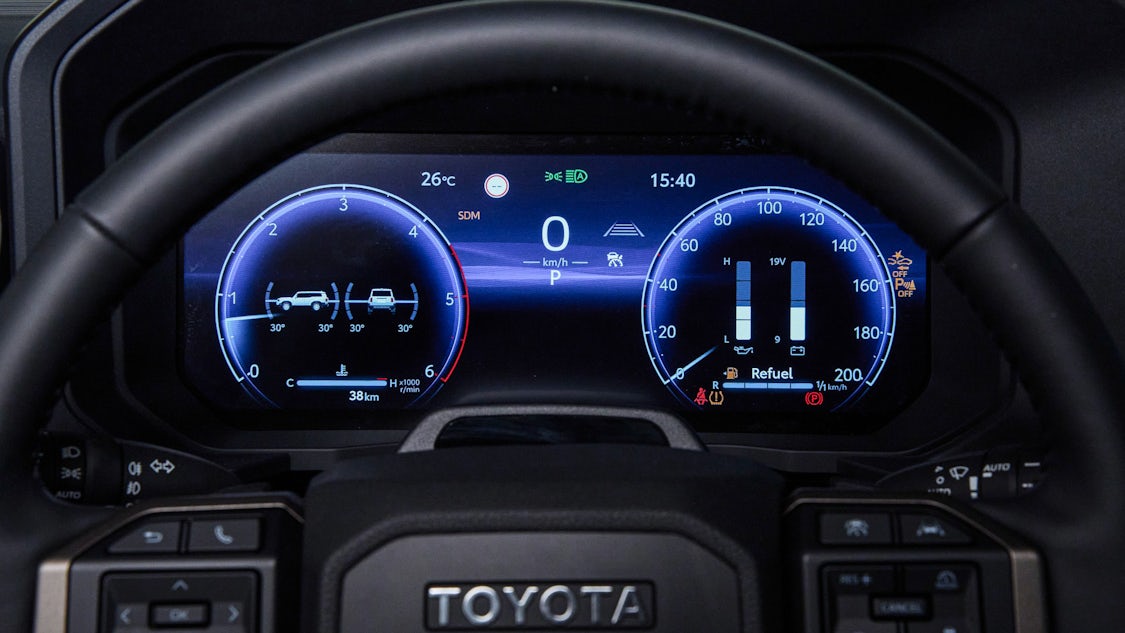
Since 2025, Toyota has equipped nearly all new models with a mandatory Driver Monitoring System. Toyota officially refers to this system as the Driver Monitor Camera (DMC). Its purpose is to monitor the driver’s attention and increase safety.
In practice, however, many drivers find the DMC intrusive because it often misinterprets normal driving behavior and cannot be permanently disabled.
Toyota does not make the system non-deactivatable by choice. European regulations require certain assist systems to automatically reactivate at every engine start, and the driver monitoring system is one of them.
Even so, many Toyota drivers feel that this adds unnecessary restrictions on their driving freedom — especially because Toyota does not make it easy to turn these systems off. The DMC can only be disabled through a nested menu inside the instrument cluster, and the process has to be repeated before every single drive.
How the DMS Works Technically

Toyota uses an infrared camera positioned above the steering column. This camera observes the driver while driving and evaluates the following parameters:
- Direction of gaze
- Whether the eyes are open or closed
- Whether the face is correctly recognized within the camera’s field
The system does not understand why the driver looks somewhere. It only detects that the gaze is not directed at the road. As a result, it often interprets completely normal, everyday actions as potential inattention.
Common situations where the system triggers warnings incorrectly include:
- A shoulder check before overtaking
- A brief look at the navigation screen
- A hand position that partly covers the camera
The system is not reacting to true inattentiveness, but rather to deviations from its optical detection range. For the driver, many of these warnings simply feel unjustified.
Why the DMS Must Be Switched Off Every Day
Technically, Toyota could implement a permanent OFF switch — but regulations do not allow it.
In the EU, specific driver-assist functions must automatically activate when the vehicle starts. Intelligent speed warnings and driver monitoring fall under this rule. This means that every time the vehicle is restarted, these systems switch back on regardless of the driver’s preference.
But there is a second factor at play: Toyota’s own implementation.
Other manufacturers follow the same regulations yet offer far more user-friendly controls. Toyota, however, hides the deactivation options deep inside the cluster menu. Drivers often need to navigate through multiple submenus just to disable all unwanted systems.
To make matters worse, Toyota activates a permanent warning light when some systems are turned off, such as LDA or PCS. This is not required by law — it is purely Toyota’s design choice. Many other brands handle this far more discreetly.
Toyota drivers therefore often say, quite accurately:
The EU forces the activation. Toyota forces the inconvenience.
And that combination creates frustration.
Which Toyota Models Include a DMS
Toyota integrates driver monitoring into almost all modern European model lines. These include:
- Toyota Land Cruiser 250
- Toyota C-HR Plug-in Hybrid
- Toyota C-HR+
- Toyota Yaris Cross from 2026
- Toyota Urban Cruiser from 2025
In other words, most new Toyota vehicles leave the showroom with DMS enabled by default.
Why So Many Drivers Look for a Better Solution
Most drivers do not reject assistance systems entirely. They simply want to choose when they are active.
In reality, daily use looks like this:
You start the car and must work through the menu before even setting off. Otherwise, the vehicle will warn you visually, acoustically, or even through steering and braking interventions while driving.
Put simply:
You waste unnecessary time reconfiguring your car every day just to drive the way you prefer.
This naturally creates the desire for a solution that gives control back to the driver.
The AAC Module: The Solution for Drivers Who Want Control Over Their Assist Systems
The AAC Module was developed specifically to simplify this daily annoyance. It is a high-quality plug-and-play retrofit unit installed behind the instrument cluster.
It follows these principles:
- No wires are cut
- Nothing is soldered
- The vehicle remains fully reversible
- No software is modified
- No error messages are triggered
The AAC Module offers something Toyota does not:
A fast shortcut that disables multiple assist systems at once — without entering the menu.
Depending on the vehicle model, the following systems can be disabled:
- Intelligent Speed Assist (ISA)
- Lane Departure Assist (LDA)
- Pre-Collision System (PCS)
- Driver Monitoring System (DMS)
- Related warning lights and alerts
And it all works through a button every Toyota driver knows:
the Cancel button on the steering wheel.
Hold it for about one second and the AAC Module disables the selected assist systems. No menus, no warning icons, no hassle.
One press, and the vehicle behaves exactly how you want it to.
Which Toyota Models Are Compatible With the AAC Module
Depending on the platform, different versions of the module are available. Currently supported or in development:
- Toyota Land Cruiser 250
- Toyota C-HR Plug-in Hybrid
- Toyota C-HR+ (when released)
- Toyota Yaris Cross from 2026
Not compatible: Toyota Urban Cruiser (Suzuki platform).
How Driving Feels With the AAC Module Installed
Many drivers report that after installing the AAC Module, the vehicle finally feels modern in the right way.
A quiet cockpit.
No unnecessary warnings.
No daily reconfiguration.
A calm and controlled start to every trip.
All assist systems remain available whenever you want them.
The difference is simply that you decide, not the car.
Conclusion
The DMS is technically solid and fulfills its regulatory purpose. But in daily use, it generates unnecessary alerts and additional work for many drivers. The EU requires activation at startup, and Toyota adds its own layer of complexity and warning indicators.
The AAC Module is not a gimmick. It is a well-engineered solution for drivers who want their Toyota to behave the way that is most practical for them.
Modern technology should support the driver — not dictate how they must drive.
